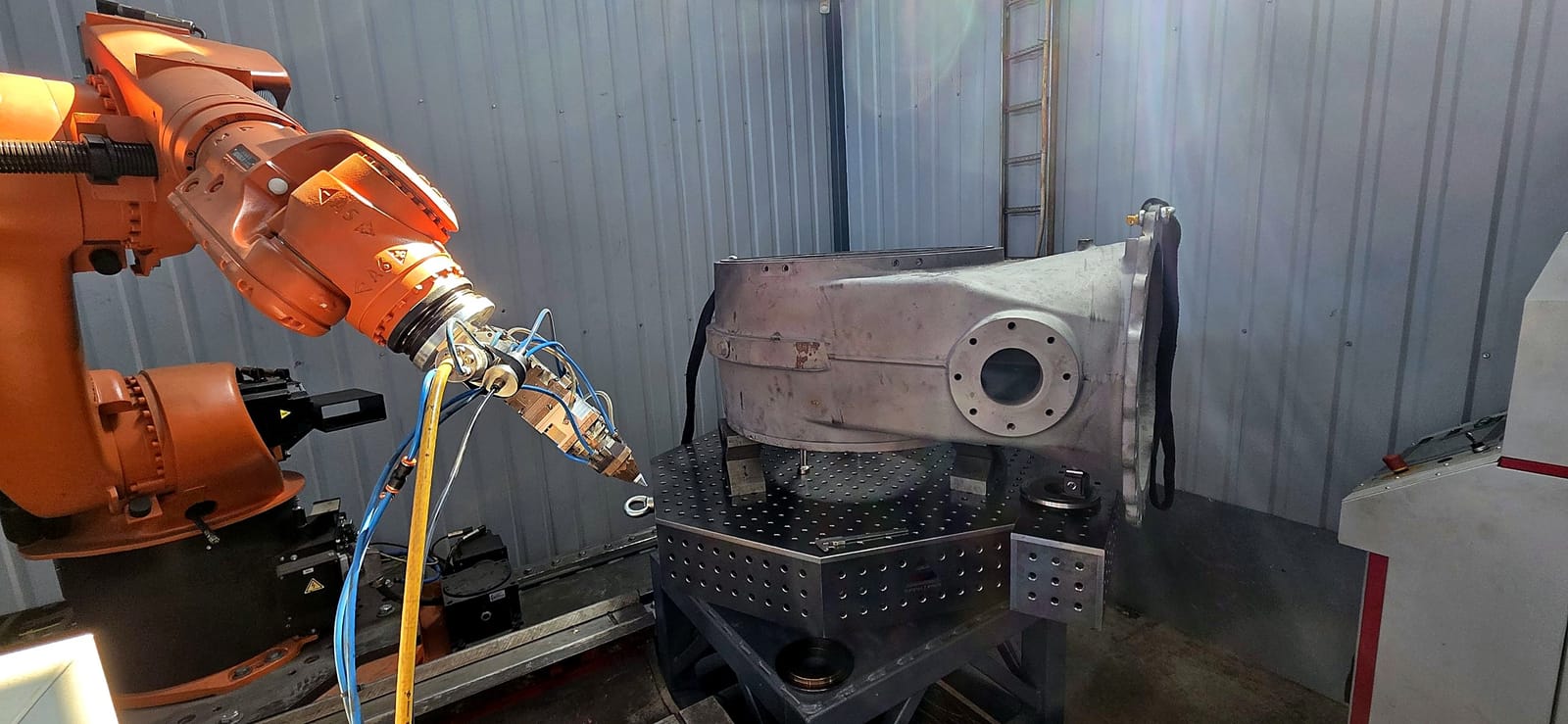
Laser Cladding
We rebuild worn, corroded or damaged surfaces with a metallurgically bonded metal layer and machine them back to original dimensions — in our workshop in Tallinn or on site.
Laser cladding: a filler alloy is melted onto the surface with a laser beam and bonds metallurgically with the base material.
Laser cladding on video

When laser cladding is the right repair
Why laser cladding
Low heat input
Avoids distortion and cracking of the part.
Metallurgical bond
The layer will not peel off like sprayed or polymer repairs.
The right alloy for the job
316L, Inconel, Stellite, hard alloys or another material to suit the project — for corrosion, cavitation or wear resistance.
Back to original dimensions
Every clad surface is machined to size.
How a repair runs
Photos and dimensions
Send photos of the damage, a drawing or basic dimensions. Initial technical feedback usually within one business day.
Preparation
The part is cleaned, inspected and the damaged layer is machined out.
Robotic laser cladding
The worn area is built up with the selected alloy.
Machining
The part is machined back to its original dimensions.
Capabilities
- In the workshop
- Parts up to Ø1600 × 5000 mm
- Materials
- 316L, Inconel, Stellite, hard alloys; others to suit the project
- Traceability
- Class-approved materials with traceability
- Finish machining
- CNC turning up to Ø1600 × 5000 mm →
Laser cladding: completed works
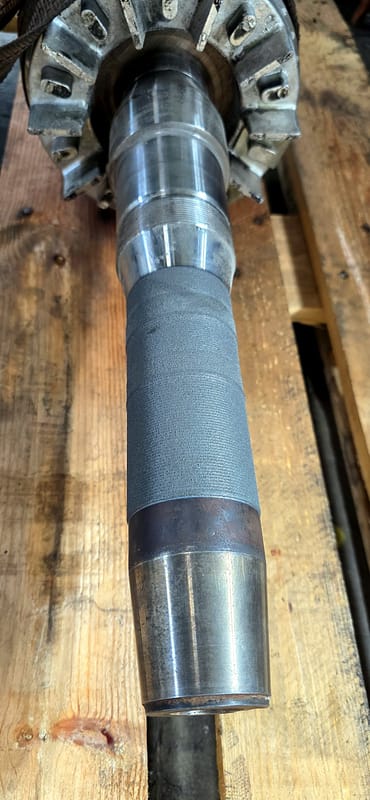
Motor rotor shaft
Worn journal on an electric motor rotor shaft
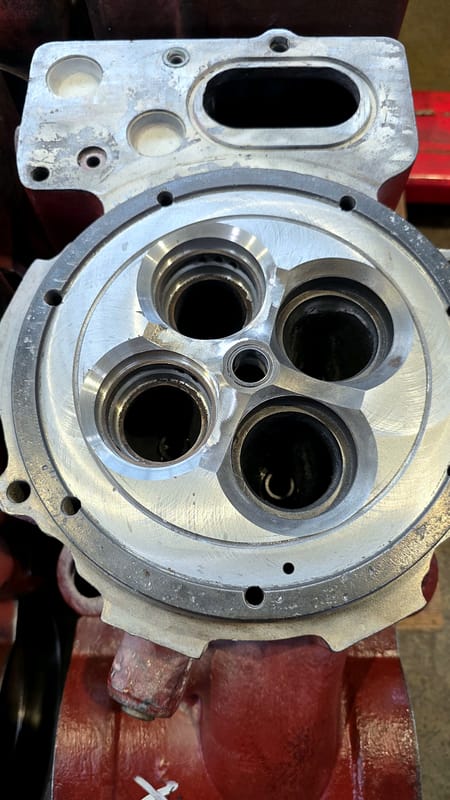
Cylinder heads
Damaged exhaust valve seat pockets on 8 cylinder heads
8 Cylinder heads
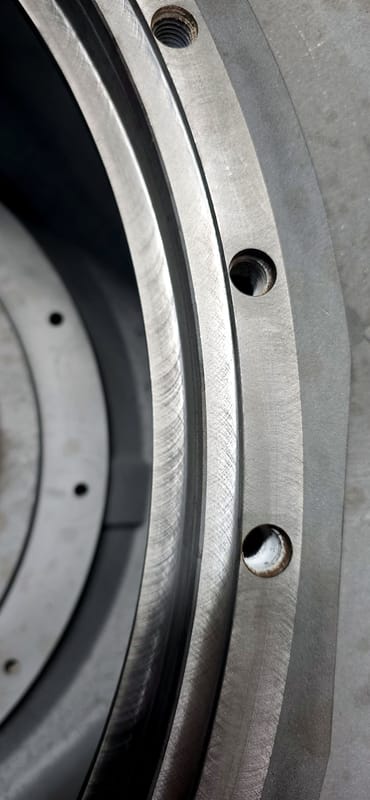
ABB turbocharger casing
ABB turbocharger casing with worn surfaces and lost geometry
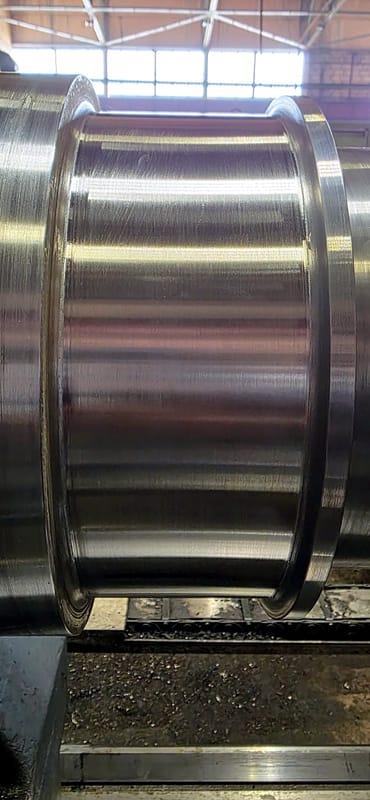
11 MW motor rotor
Worn bearing journal on an 11 MW electric motor rotor
11 MW Motor rating
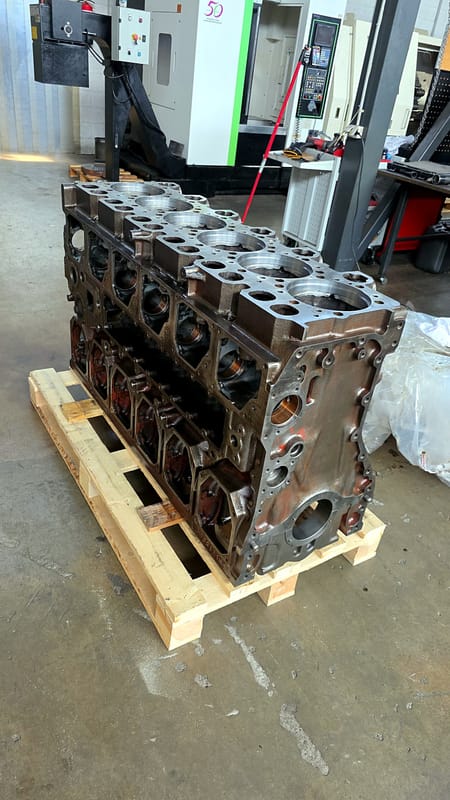
Engine blocks
Engine block worn beyond service limits
6 Engine blocks restored
Send us the problem
Photos of the damage, a drawing or basic dimensions and information about where the component is installed are enough to start.
Initial technical feedback usually within one business day.