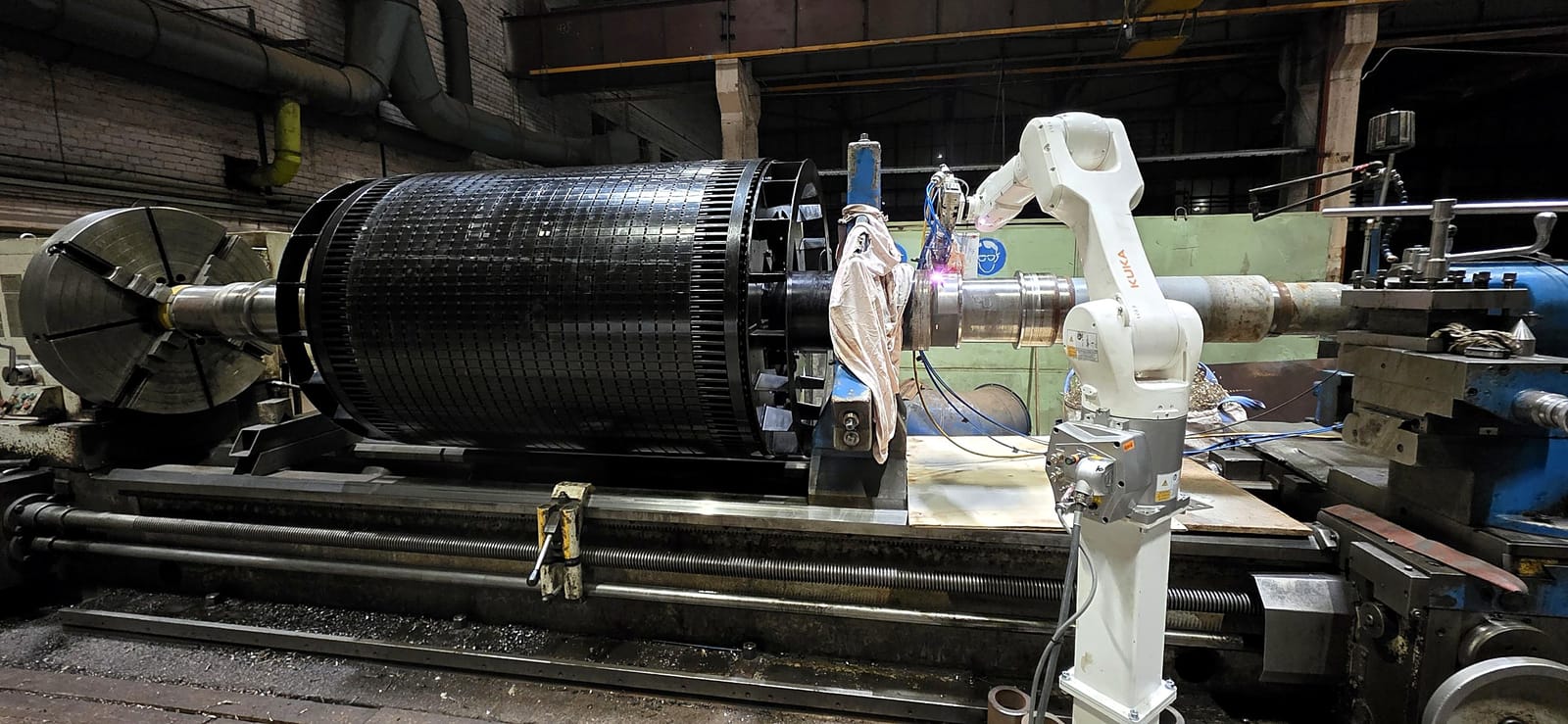
On-Site Laser Cladding
We bring our robotic laser cladding equipment to where the equipment stands, build up the worn surface and machine it back to original dimensions — without transport to a workshop.
On-site laser cladding on video


When to clad on site
Why laser cladding on site
No transport
The rotor or shaft stays where it is installed.
Low heat input
Avoids distortion and cracking of the part.
Metallurgical bond
The layer will not peel off like sprayed or polymer repairs.
Machined to size
After cladding, the surface is machined back to original dimensions.
How an on-site cladding job runs
Equipment and location
Send photos, dimensions and where the equipment is installed. Initial technical feedback usually within one business day.
Plan
We define the alloy and the cladding and machining steps.
Robotic laser cladding on site
Our equipment is set up at the component and the worn area is built up.
Machining on site
The clad surface is machined back to original dimensions.
Capabilities
- Equipment
- Robotic laser cladding, brought to your facility
- Materials
- 316L, Inconel, Stellite, hard alloys; others to suit the project
- In the workshop
- Laser cladding of parts up to Ø1600 × 5000 mm →
- Traceability
- Class-approved materials with traceability
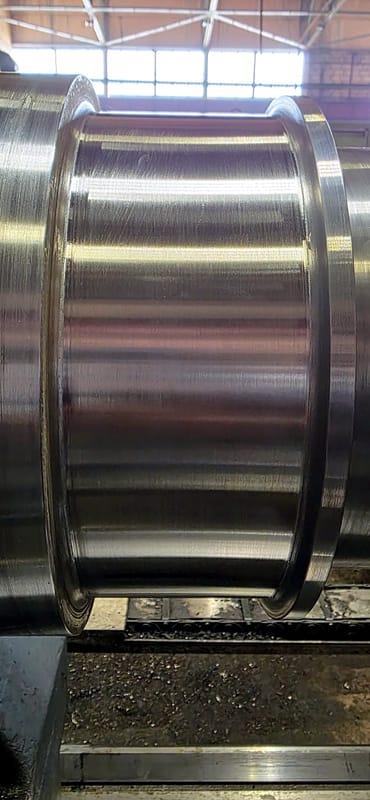
On-site laser cladding: completed work
Send us the problem
Photos of the damage, a drawing or basic dimensions and information about where the component is installed are enough to start.
Initial technical feedback usually within one business day.